
Summary
Keywords
Full Transcript
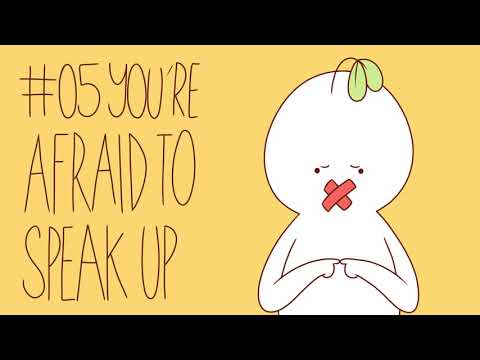
Learning how to trust yourself is the key to creating a healthy relationship with yourself, as it fosters a deeper sense of self-love, self-compassion, and self-confidence within us. But for a lot of us, self-trust doesn’t always come so easily. Many people often struggle with issues of self-doubt that can lead them to sabotage their own chances of happiness and success. So, how do you know when you don’t trust yourself? In this video, we've listed out a few signs that can help you figure it out before it’s too late! If you relate to this video and want to learn how to trust your gut again, we have a video on the gut instincts you shouldn't ignore: https://youtu.be/NPQ0XCkD2jE Writer: Chloe Avenasa Script Editor: Morgan Franz Script Manager: Kelly Soong VO: Amanda Silvera Music & Sound Design: Urban Goose Studios Animator: Ceechan YouTube Manager: Cindy Cheong Mirels, H. L., Greblo, P., & Dean, J. B. (2002). Judgmental self-doubt: Beliefs about one’s judgmental prowess. Personality and individual differences, 33(5), 741-758. Govier, T. (1993). Self‐trust, autonomy, and self‐esteem. Hypatia, 8(1), 99-120. Lehrer, K. (1999). Self-trust: A study of reason, knowledge and autonomy. Olson, K. C., Poehlmann, K. M., Yost, J. H., Lynch, M. E., & Arkin, R. M. (2000). Subjective overachievement: Individual differences in self‐doubt and concern with performance. Journal of Personality, 68(3), 491-524. Hermann, A. D., Leonardelli, G. J., & Arkin, R. M. (2002). Self-doubt and self-esteem: A threat from within. Personality and Social Psychology Bulletin, 28(3), 395-408. If you have any stories to share with us or video requests, please email us at [email protected]

Continue this lesson in the app
Install CourseHive on Android or iOS to keep learning while you move.




