
Summary
Keywords
Full Transcript
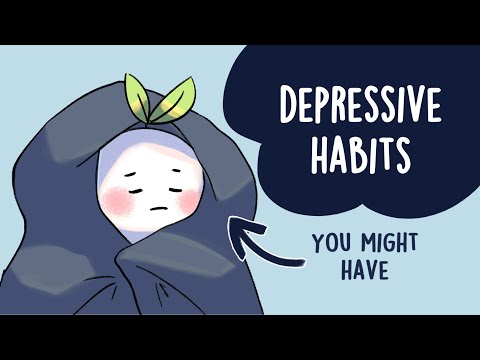
Do you consider yourself knowledgeable enough to spot the signs of depression when you see it? If you are someone who often reads our articles, watches our videos, and frequents other psychology-related self-help websites or journals, then you might answer yes. And while we’re certainly grateful for the recent mental health awareness movement that’s been happening all over the world, there might still be a lot left for us to learn about the true nature of depression. We also made a video on the surprising habits you might develop because of anxiety: https://youtu.be/-xanwQD8fTE Writer: Chloe Avenasa Script Editor: Vanessa Tao Script Manager: Kelly Soong VO: Amanda Silvera Animator: Yussie Feng YouTube Manager: Cindy Cheong References: American Psychological Association (2013). Diagnostic and Statistical Manual of Mental Disorders – 5th Edition. APA Publishing. Chen, X., Sykora, M. D., Jackson, T. W., & Elayan, S. (2018, April). What about mood swings: Identifying depression on twitter with temporal measures of emotions. In Companion Proceedings of The Web Conference 2018 (pp. 1653-1660). Glatt, M. M., & Cook, C. C. (2007). Pathological spending as a form of psychological dependence. British Journal of Addiction, 82(11), 1257-1258. Creasy, K. (2020). The Problem of Affective Nihilism. In The Problem of Affective Nihilism in Nietzsche (pp. 87-106). Palgrave Macmillan, Cham. Join this channel to get access to perks: https://www.youtube.com/channel/UCkJEpR7JmS36tajD34Gp4VA/join Would you like to animate for the team? Check out this: https://psych2go.net/interested-in-animating-for-pych2go-faq/ Interested in writing for psych2go? Check out: https://psych2go.net/script-writing-position-faqs/ We're also on a mission to make mental health accessible around the world. Many of our content are translated to other languages by fans and people like you guys :) 1) Psych2Go Kr - https://www.youtube.com/channel/UCQh9DSw0L23tNULgxussrYg 심리툰 Psych2Go Korea https://www.youtube.com/channel/UCNTGv5tBhqxIN3jAHbhumeQ 2) Vietnamese - https://www.youtube.com/channel/UCe-DaRWfYRVfcdasozr874A 3) German - https://www.youtube.com/c/Psych2GoDE/videos 4) Indonesian - https://www.youtube.com/channel/UCwc1rtdEJDr-VKQT5bijwwQ 5) Russian - youtube.com/channel/UC4vMpG7hqxT0GCx2YAIF7rA/ 6) Vietnamese - https://www.youtube.com/channel/UCe-DaRWfYRVfcdasozr874A 7) Español - https://www.youtube.com/channel/UCl5OsVzh4_Xf8fSmxhOMP5Q 8) Hindi - https://www.youtube.com/channel/UCcesO-EWK1l6dF2QgB9aUkw

Continue this lesson in the app
Install CourseHive on Android or iOS to keep learning while you move.

