
Summary
Keywords
Full Transcript
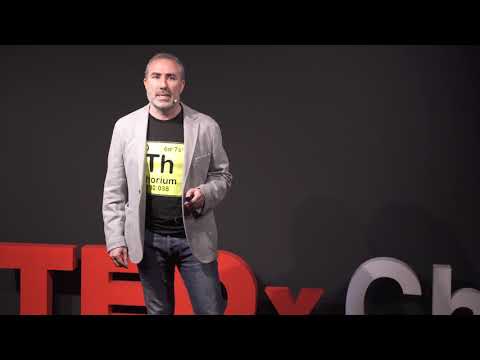
The history of the human being and the improvement of our living conditions have been intimately related to the mastery of new forms of energy. This mastery allowed human beings to externalize the weak energy of their muscles, making animals first and machines second to work for us. The progress of human beings, therefore, depends on our energy consumption, and today we face a huge challenge as a species: to continue progressing on the basis of energies that do not emit greenhouse gases. In this sense, nuclear energy is a fundamental and essential player in this new paradigm. However, nuclear energy has always had a social rejection based on arguments of proliferation and radioactive waste. But what if we were able to develop nuclear reactors that did not produce long-lived radioactive waste? What if we were able to build nuclear reactors that could not be used for proliferating uses? What if we had in our hands the energy reserves of humanity for the next millennia? Manuel Fernández Ordóñez holds a degree in Particle Physics and a Ph.D. in Nuclear Physics from the University of Santiago de Compostela. For years he worked as a researcher in nuclear science and technology, where he developed his research in the field of relativistic nuclear dynamics and advanced nuclear fuel cycles. Nowadays, he works in a multinational company of the energy sector as responsible for institutional relations. He is an analyst specialized in energy sectors and, specifically, in nuclear energy. He has published dozens of opinion articles in national media such as Libertad Digital, Expansión or El Mundo. This talk was given at a TEDx event using the TED conference format but independently organized by a local community. Learn more at https://www.ted.com/tedx

Continue this lesson in the app
Install CourseHive on Android or iOS to keep learning while you move.

