
Summary
Full Transcript
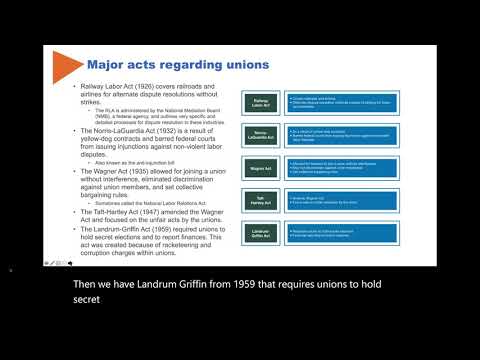
Union membership in the U.S has been declining. Today, union membership consists of 10.5% of the workforce. The reasons for union decline are varied. Some say moving jobs overseas is the reason, while others say unions’ hard-line tactics put them out of favor. Union challenges also include globalization and companies’ wanting a union-free workplace. The U.S. began its first labor movement in the 1800s, the result of low wages, no vacation time, safety issues, and other problems. Legislation has been created over time to support both labor unions and the companies that have labor unions. To form a union, the organizer must have signatures from 30% of the employees. If this occurs, the NLRB will facilitate a card check to determine more than 50% of the workforce at that company agrees with union representation. If the company does not accept this, then the NLRB holds secret elections to determine if the employees will be unionized. A collective bargaining agreement is put into place if the vote is yes. Companies prefer not to have unions in their organizations because it affects costs and operational productivity, and they will try to prevent a union from organizing in their workplace. Managers are impacted when a company does unionize. E.g., management rights are affected, and everything must be guided by the union contract instead of management prerogative. HROB152 Ch 10 Part 3

Continue this lesson in the app
Install CourseHive on Android or iOS to keep learning while you move.




