Summary
Keywords
Full Transcript
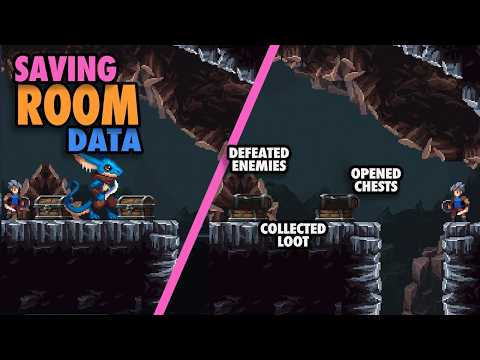
Build a fully persistent world in your Metroidvania by tracking what actually changes. In this final part of the Scene Persistence series, we create a World State system that uses GUIDs to uniquely identify objects and save their state across rooms. This allows your game to remember exactly what the player has done—whether that’s picking up loot, opening chests, or defeating enemies—without relying on fragile scene-based logic. Instead of resetting every time a room reloads, your world becomes consistent, reactive, and believable. We’ll walk through three practical case studies to show how this system works in real projects: - Loot objects that stay collected - Chests that remain opened - Enemies that stay defeated Like the rest of the series, everything is built with scalability in mind—so you can extend this system to anything in your game that needs persistence. What you’ll learn in this Unity tutorial: • How to design a global World State system using GUIDs • How to persist object state across scene loads • How to uniquely identify objects in a safe, scalable way • How to apply persistence to loot, chests, and enemies • How to avoid common pitfalls with scene-based saving • How to build systems that scale with your game 🧠 Perfect for: Metroidvania developers 2D Unity developers Devs building save/load systems Anyone wanting persistent, reactive game worlds

Continue this lesson in the app
Install CourseHive on Android or iOS to keep learning while you move.