Summary
Keywords
Full Transcript
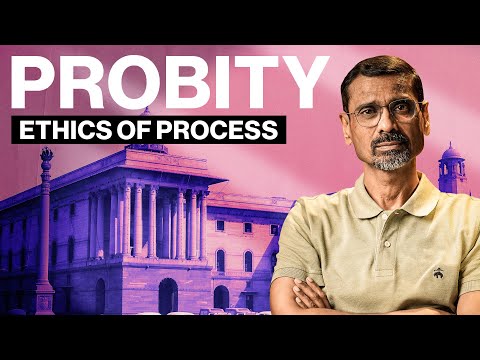
Probity in Public Life | UPSC GS-IV Ethics | Public Administration Explained Probity in Public Life is one of the most important topics in UPSC GS-IV Ethics, public administration, and governance. It is frequently asked in UPSC Mains and often confused with integrity, transparency, and accountability. But what exactly is probity in governance? A decision may be correct. A policy may deliver results. But was the process transparent, impartial, and accountable? In public administration, ethics is not judged by outcomes alone. It is judged by how public power is exercised. This episode explains probity as the ethics of process — the standards that make government action legitimate. This video is especially useful for: - UPSC GS-IV Ethics preparation - IAS and civil services aspirants - Students of public administration and governance - Anyone studying integrity, transparency, and accountability in public life In this video, you will understand: • The meaning of probity in public life • Difference between probity and integrity in governance • Why probity is central to public administration ethics • The five pillars of probity: transparency, accountability, impartiality, objectivity, and fairness • Where probity is most tested — public procurement, recruitment, discretionary power, and public spending • How probity builds public trust and institutional legitimacy Integrity governs personal conduct. Probity governs the exercise of public power. Without probity in governance, even successful decisions lose moral legitimacy. Why Probity Matters in UPSC GS-IV Probity in public life is a recurring theme in: - UPSC Ethics Paper (GS-IV) - Questions on integrity and aptitude - Case studies on governance and public accountability - Topics like corruption, transparency, and institutional ethics Understanding probity helps structure better answers in: - Ethics theory questions - Case study analysis - Governance-based moral dilemmas ⏱ Chapters 00:00 Outcomes Can Be Right — Process Can Still Be Wrong 01:12 What Is Probity? Ethics of Process in Public Administration 02:41 Why Probity Matters — Trust, Legitimacy, and Governance 05:34 The Five Pillars of Probity — Accountability, Transparency, Impartiality 07:48 Probity vs Integrity — Institutional Process vs Personal Character 09:31 Where Probity Is Tested — Procurement, Recruitment, Discretion 12:16 Protecting Probity — Oversight, Audit, and Accountability Mechanisms 14:10 Probity as Organisational Culture — Beyond Rules and Compliance 16:05 Probity and Power — Why Process Makes Authority Legitimate #ProbityInPublicLife #UPSCGS4 #GS4Ethics #PublicAdministration #IntegrityInGovernance #EthicsForIAS #CivilServicesPreparation #GovernanceEthics #TransparencyAndAccountability #UPSC2025 #EthicsPaper4 #PublicServiceEthics #ProbityExplained #UPSCMainsPreparation You can also follow us on: Website - https://www.ethics101.in/ Instagram - https://instagram.com/ethics.101 Twitter - https://twitter.com/kmpathi LinkedIn - https://www.linkedin.com/in/k-m-pathi-446559151/ Telegram - https://t.me/kmpathi

Continue this lesson in the app
Install CourseHive on Android or iOS to keep learning while you move.