Summary
Full Transcript
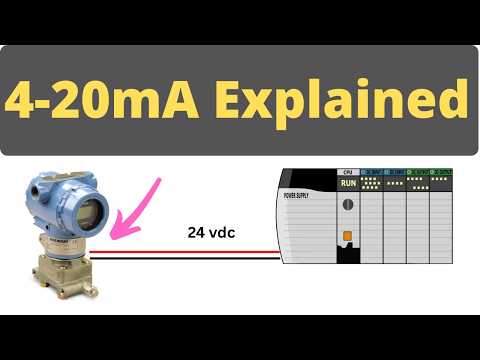
What is a 4–20mA signal and why is it still used in modern control systems? 4-20ma explained In this video, I explain how a 4–20mA current loop works using a simple pressure transmitter example, and why it’s still one of the most reliable ways to send signals in industrial environments. Whether you’re new to instrumentation or working in the field, understanding 4–20mA loops is essential for fault finding and day-to-day work on control systems. ⚙️ What you’ll learn: How a 4–20mA loop works Why 4mA is used as a “live zero” How transmitters control current in the loop Why 4–20mA is so reliable over long cable runs Differences between 2-wire and 4-wire transmitters How digital signals like HART work alongside 4–20mA 🛠️ Real-world insight: This is the same type of signal used every day in industrial plants, offshore platforms, and process systems — and it’s still the go-to for simple, reliable measurement. 🔍 Topics covered: 4-20mA explained, current loop basics, pressure transmitter, PLC analogue input, instrumentation basics, process control signals, industrial automation, HART communication, analogue vs digital signals ▶▶Check out my website for more articles on Instrumentation: https://www.instrumentationcontrol.info/articles

Continue this lesson in the app
Install CourseHive on Android or iOS to keep learning while you move.