Summary
Keywords
Full Transcript
Hey, thanks for joining me for this lecture. In this video, we're going to be exploring the types of damages that are available in torque cases. If you haven't already, I would recommend taking a look at a prior video where we discuss and introduce torque law, as that'll be helpful for this particular video. In this lecture, we're going to explore the various forms of damages that can be awarded to an injured party in a torque lawsuit.
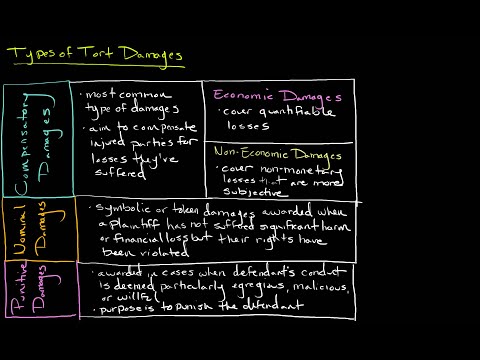
We're going to discuss compensatory damages, nominal damages, as well as punitive damages, along with some recent court rulings that highlight each of those forms of damages. So, let's get started. The first form of damages available in torque law that we're going to discuss are what are called compensatory damages. Now, compensatory damages, I should say, are the most common type of damages that are awarded in torque cases.
They simply aim to compensate the injured party for the losses that they have suffered as a result of the defendant's wrongful actions. Now, there are two subcategories of compensatory damages that you need to be aware of. The first is what's called economic damages. Now, economic damages are intended to cover the quantifiable financial losses incurred by a plaintiff.
So, these often include things like medical expenses, property damage, lost wages, or even future earnings. The second subcategory of compensatory damages are non-economic damages. Now, non-economic damages help to compensate the injured party for non-monitory losses that are more subjective and really difficult to quantify. These can include things like pain and suffering, emotional distress, loss of enjoyment of life, and loss of consortium.
In one particular notable case, a jury actually awarded $2 million in non-economic damages to a plaintiff who suffered severe emotional distress and a loss of quality of life due to an actual defective product. The next type of damages we're going to explore are what are called nominal damages. Now, nominal damages are symbolic or token damages that are awarded when a plaintiff has not suffered significant harm or financial loss, but in some way their rights have been violated. Now, these damages are typically minimal and can be even a low as a dollar and serve to really just recognize the plaintiff's legal rights.
Lastly, we have punitive damages, also known as exemplary damages. Now, punitive damages are awarded in cases where the defendant's conduct is deemed to be particularly egregious, malicious, or willful. Now, the purpose of punitive damages, much like the name sounds, is to punish the defendant and deter others from engaging in similar conduct. So these damages go beyond simply compensating the plaintiff and are meant to actually send a message.
For example, in 2021, a jury awarded $4.5 billion in punitive damages against Purdue Pharma and the Sackler family for knowingly producing and marketing the addictive painkiller oxycontin. In conclusion, the types of damages available in tort cases serve different purposes in the pursuit of justice. Understanding the different types of damages in tort cases can help us appreciate the complexities of seeking, redress, and promoting accountability in our legal system. I hope you found this information to be interesting and helpful.
Thank you for watching, and we'll see you next time.

Continue this lesson in the app
Install CourseHive on Android or iOS to keep learning while you move.