
Summary
Keywords
Full Transcript
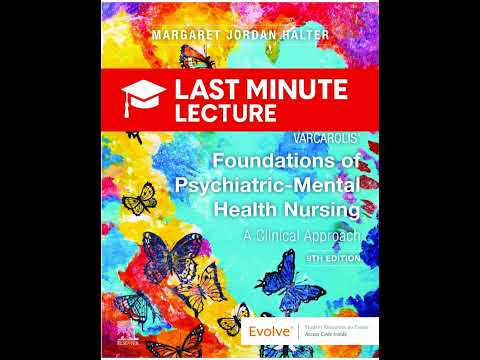
Chapter 14 of Varcarolis’ Foundations of Psychiatric-Mental Health Nursing explores the spectrum of depressive disorders, emphasizing that these conditions share core symptoms like sadness, irritability, and impaired functioning. Key conditions discussed include Major Depressive Disorder (MDD), defined by a persistently depressed mood or loss of interest lasting at least two weeks, as well as Persistent Depressive Disorder (formerly dysthymia), Premenstrual Dysphoric Disorder (PMDD), and Disruptive Mood Dysregulation Disorder (DMDD), a diagnosis introduced for children with severe irritability previously mislabeled as bipolar disorder. Epidemiologically, depression is a leading global cause of disability, frequently affecting young adults and women, and often coexisting with anxiety or substance use problems. Etiology is viewed through the complex Diathesis-Stress Model, where genetic and biological vulnerabilities interact with life stressors. Biological factors encompass abnormalities in key neurotransmitters like serotonin and norepinephrine, along with hyperactivity in the hypothalamic-pituitary-adrenal (HPA) axis and a growing understanding of the role of inflammation. Cognitive theory highlights how automatic negative thought patterns, such as Beck's cognitive triad (negative views of self, the world, and the future), perpetuate depressive feelings. The nursing process prioritizes ongoing assessment for suicidal ideation, evaluating changes in physical function (vegetative signs), and utilizing tools like the Patient Health Questionnaire-9 (PHQ-9). Treatment follows a three-phase plan (acute, continuation, maintenance), commonly employing psychopharmacology—Selective Serotonin Reuptake Inhibitors (SSRIs) are first-line, but specialized medications like esketamine (for treatment-resistant depression) and brexanolone (for postpartum depression) are available. Somatic treatments, including highly effective Electroconvulsive Therapy (ECT), Repetitive Transcranial Magnetic Stimulation (rTMS), and Vagus Nerve Stimulation (VNS), provide alternatives, while therapeutic modalities like Cognitive Behavioral Therapy (CBT) and Interpersonal Therapy (IPT) remain essential for long-term recovery and managing cognitive distortions. 📘 Read full blog summaries for every chapter: https://lastminutelecture.com 📘 Have a book recommendation? Submit your suggestion here: https://forms.gle/y7vQQ6WHoNgKeJmh8 Thank you for being a part of our little Last Minute Lecture family! ⚠️ Disclaimer: These summaries are created for educational and entertainment purposes only. They provide transformative commentary and paraphrased overviews to help students understand key ideas from the referenced textbooks. Last Minute Lecture is not affiliated with, sponsored by, or endorsed by any textbook publisher or author. All textbook titles, names, and cover images—when shown—are used under nominative fair use solely for identification of the work being discussed. Some portions of the writing and narration are generated with AI-assisted tools to enhance accessibility and consistency. While every effort has been made to ensure accuracy, these materials are intended to supplement—not replace—official course readings, lectures, or professional study resources. Always refer to the original textbook and instructor guidance for complete and authoritative information.

Continue this lesson in the app
Install CourseHive on Android or iOS to keep learning while you move.

