
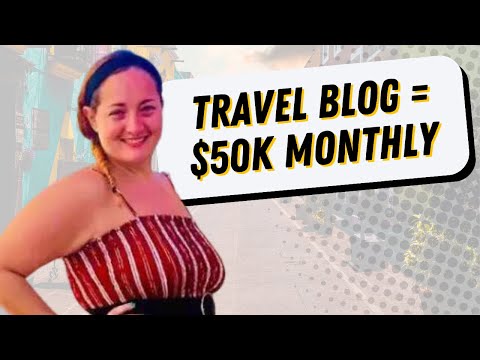
The Side Hustle Show - Full Episodes $50K Months in Just 3 Years: How I Grew My Hobby Travel Blog
$50K Months in Just 3 Years: How I Grew My Hobby Travel Blog Transcript and Lesson Notes
I had 15 years in corporate America. I was like chewed up and spit out like a lot of people. And I was like, I just have to figure something out. And my first entry into my own online business was through drop shipping. It had a really low barrier to entry. And I started
Quick Summary
I had 15 years in corporate America. I was like chewed up and spit out like a lot of people. And I was like, I just have to figure something out. And my first entry into my own online business was through drop shipping. It had a really low barrier to entry. And I started
Key Takeaways
- Review the core idea: I had 15 years in corporate America. I was like chewed up and spit out like a lot of people. And I was like, I just have to figure something out. And
- Understand how side hustle fits into $50K Months in Just 3 Years: How I Grew My Hobby Travel Blog.
- Understand how side hustle show fits into $50K Months in Just 3 Years: How I Grew My Hobby Travel Blog.
- Understand how side hustle ideas fits into $50K Months in Just 3 Years: How I Grew My Hobby Travel Blog.
- Understand how blog fits into $50K Months in Just 3 Years: How I Grew My Hobby Travel Blog.
Key Concepts
Full Transcript
I had 15 years in corporate America. I was like chewed up and spit out like a lot of people. And I was like, I just have to figure something out. And my first entry into my own online business was through drop shipping.
It had a really low barrier to entry. And I started there and I started a store called Pockets on my dress, which sold dresses with pockets. And if you're female or if you're just wear dresses, you know the struggle is real to have pockets on them or on any of female clothing. But as soon as the pandemic hit, nobody was buying dresses anymore.
OK, fair, yeah. Even if they had pockets and were cute. So I was like, what am I going to do with myself? I have no idea.
But I had been traveling Mexico by myself for like a year. And this part I still don't totally know how it happened. But I ended up joining a bunch of travel blogging groups, maybe like unconsciously or subconsciously. I was like, I can turn.
I can be a blogger. I really don't know. Like I was my last quote unquote real job was as an editor of a Miami travel magazine. And so maybe there was some kind of subconscious stuff going on there.
But I joined these blogging groups because travel bloggers were also grounded during the pandemic. And they're used to all this freedom. So everyone was instead meeting up virtually in Facebook groups. And I saw all these bloggers were still making a lot of money during the pandemic.
Believe it or not, not everyone. But there were some. There were some. And I was like, well, what are they doing?
And I learned that they were doing something called affiliate marketing where they were getting paid by Airbnb, a commission rate for promoting Airbnb's, and then people booking those Airbnb's. Because that was what people were doing, right? They were going off on their remote jobs into cabins in the woods to be isolated and work from there. So people were getting these huge commissions for three months stays in really nice Airbnb's in the woods of North Carolina.
People coming down from New York, let's say. Got it. Yeah. So I was like, well, wait, I can do that.
And I always just took this stance that if they can, I can. So that's where it all started. And for me, the blog was always going to be profitable from the beginning. I know when people hear the word blog, that's not what they think.
But for me, I saw these people doing it. And I just always was like, if they can, I can. I love that quote. Yeah.
If somebody else could do it, I could figure this out too. Yeah. Why not? Here's the way to get it done.
So the domain is registered March 2020. The site starts a month later. Tell me about the initial traction, the initial content strategy. This is travelmexico solo.com.
What's going on over there in the early days? So I started it. And I started it probably how anyone would start a blog, which is like writing about me traveling around Mexico. But the reality is that nobody cares about me traveling around Mexico.
They care about how I can help them travel Mexico. So like I said, I joined all these Facebook groups. And I wasn't working with other travel bloggers. I even met a couple of Mexico bloggers.
Well, not really Mexico, strictly Mexico, but they were based in Mexico. So I started developing even more deeper relationships with them, just because of our common country. And the best piece of advice I got early on was to take a course. So I started enrolling in blogging courses right away.
Luckily, I did have the budget to be able to do that. And I understand that not everybody does. But I did. And that's really, I think the only reason that you wanted me on your podcast today.
I think people think it's blogging as one thing, but it's not. And I tell people it's more of a science than an art. There's a formula. We're essentially just trying to please the Google gods.
And there's a certain way that the Google gods want to be pleased. So I learned that kind of stuff in a course, which is why I was making money. I did not make money in 2022 or 2020. Sorry, my first year.
But I did make money in 2021. Yeah, I think that's an important note. And maybe blog is maybe an outdated or becoming an outdated name for what this is. It's running a helpful website, building out this library of content that is hopefully somewhat evergreen.
It's not necessarily about you as the author, as you're going to sprinkle in your own bits of expertise. But it's about how can you help me the reader? How can you solve my problem? I typed this question into Google, I'm looking for the best answer.
And here's your opportunity as the website owner to provide that answer and start to collect traffic and revenue from that. And we'll get into the monetization. But you said blogging or website owning today is more of a science than it is an art. So can you speak to what goes into that science for you when you're looking at what kind of content to create?
It's essentially how can I get myself to number one of Google? And there's a lot of steps to, no, actually not a lot. But there's steps to take keyword research. And there's tools available for that where I can look up certain search terms, see what kind of search volume they're getting, see what kind of competition they have.
There's definitely a sweet spot there of low-commitation high search volume. I call those unicorns. They are kind of few and far between. What's interesting, I don't know, Pausy there, is that even 10 years ago, what I said, I don't know, blogging pretty saturated, travel blogging, especially everybody of the brother wants to have a blog">travel blog.
But here you go, trying to find these unicorn keywords, high volume low competition, even in the past couple years, oh, they still exist. I think that's encouraging for people to hear. They do exist. But I guess also when people say you have a blog">travel blog, I mean, I guess the really proper terminology nowadays is that I have a niche site, not a travel blog, because I don't have a travel blog.
Like, nomadic mat has a blog">travel blog, right? And he writes about every single country in the world and all this stuff in his blog's 15 years old. And I can't touch him in terms of competition. It's not going to happen for me.
And I manage that expectation with my students. That's usually the first thing I say. Like, if you want a general blog">travel blog, I'm not the person to help you do that, because you can't, like, with a 15-year gap, you're not catching up to those people that have been at it for so long. But if you niche down, my main site is a Mexico site.
It's only about Mexico. I only write about Mexico. You know, those kinds of things. And you were living there at the time, or are you still living there?
But you were living there when it started? Yeah, I've been in Mexico since 2018. I live here full time. So I know my subject very well.
It wasn't just like I threw a dart at the wall kind of a thing. There was some thought there. But yeah, the riches are in the niches. Riches are in the niches.
So that helps you to, you know, I feel like I cut to the front of the line, let's say, having a niche like that. But I started to win the race. But having a niche will help you succeed faster, for sure. Yeah, I've always wanted a blog">travel blog.
If for nothing else, then just write off trips, be like, well, it was a business expense. I had to write about it for the travel site, you know? So there's something to do to say, where's that just bad tax advice? No, I do it every day.
OK. Sorry. All right. So you're starting out this keyword research process.
What are people looking for related to my niche, related to travel in Mexico? And so I imagine it's best places to visit is Mexico safe. Keywords like that? Am I going down the right path here?
Yeah, I mean, I think general travel stuff, right? So what are travelers need? They need somewhere to stay, right? So like hotels, that's big keywords.
Then they need things to do. So things to do in X place is always a big one. Those tend to be competitive. But then you can go what's called a long-tail keyword.
So it would be things to do in Cosmell, that's a city in Mexico, with kids, or things to do in Cosmell when it rains, right? Because it's like an island. So people are like, what do I do in the rain? Or things to do in Cosmell at night, like those kinds of things make it make it, like.
So that's where you're going to find the unicorns. You're not going to find them with like the big keywords. But yeah, you just travel blogging keywords are what travelers want or need. So hotels, travel insurance, packing tips, things to do, tours, the must see sites.
Like is it safe? Safety's big with Mexico, but that's not going to be every country necessarily. I think it does come up for most countries, but Mexico for sure. Yeah.
That's helpful. So looking at that, maybe that high-level keyword is things to do in Cosmell, but adding a qualifier, adding something to it to make it, it was going to have lower search volume, but it's also going to be a lot less competitive. And that's kind of for a new website owner, it's like, I'm trying to get that toe hold. I'm trying to get something to rank on page one.
And then I can kind of build out my library of content from there. Do you remember what it was, a topic or topics that were those first toe holds that started to pick up traffic for you? Well, I started, I think, in a way that a lot of people don't start. I think a lot of people think that the number one way to make money off of a site is the ads on your site.
I have three sites on Mediavine, which is Mediavine. And I believe it's called a Raptive now. It used to be called Ad Thrive. They're like the two premium ad networks for sites.
And they require a lot of traffic for you to get onto them. I have three sites on them, and I triple my income with affiliate marketing that I do with the ads. So for me, that's where I started. I just always started with affiliate marketing.
So the money started coming in first, and then the traffic kind of comes along with it, if that makes sense. So I don't know if there was some big traffic explosion anywhere, or like I've never gone viral, so to speak. But it was just little things that kept adding up over time. It wasn't making any money that first year.
Then things started to pick up in year two. What, you know, I mean, if you ask anybody, like, hey, I've been at this business for nine months, and I've got no revenue. I've got nothing to show for it. Like, what kept you going during that time?
Oh, never wanting to ask a boss for the day off ever again. Yes, this was me. This was me, my corporate job. It just, and he was never the boss that said no, but it was the same.
I had the same. Like, it felt kind of just like a child. Like, I felt like a child. It was like, it's roughly the wrong way.
Can I go to the bathroom? Like, that's how I felt. I don't know. Like, that's, I don't know.
Like, it just infant highly infantly lies. I'm not sure if that's the word. But I, yeah, I don't know. It was just like, it was literal sheer determination.
And, you know, like, a lot of people will talk about this in like the business development or personal development. Like, know your why. And I knew my why. I couldn't, I knew I couldn't live a happy life.
Like, using an alarm clock every day, asking a boss for permission, like not being in control of my own agency. I don't know if that's like too deep or whatever, but. No, it resonates. Yeah, like, I just couldn't, I knew I couldn't have happiness that way.
Because, I mean, you're kind of like, I mean, and not everybody. And I didn't have a terrible job. I had like, comparatively, I had it pretty OK. But, I mean, it's essentially like the golden cage or the golden handcuffs.
Like, as OK as I had it, I knew it wasn't what I wanted. So, yeah, know your why. You know, but I also like, my boyfriend's big into YouTube. I'm not that much of a watcher of YouTube.
But we would see some of these channels. And they were like, I mean, not that I'm really qualified to like say this, but as they were kind of bad. And I'm like, these are famous channels. And then I just started seeing that they were like 10 years old.
And I realized like, if you can hang in for those few years till you get over like a hump, you are successful. Like, sticking. Sticking around is like most of the way most people see success. So, I don't know.
But it's also like we were also in quarantine. I mean, it wasn't like I was going anywhere. So. Nothing else to do than sit in.
Sit and pump out these articles. I also kind of had nothing else to do. That's, yes, I resonate with that 100%. And, you know, we've had other guests, you know, what kept you going through those times, you know, pre-revenue on the website when you're just cranking out content, trying and hoping for some day, these, you know, rankings will come.
And in hindsight, it's easy to say, yeah, I knew it was going to work and I would have these, you know, multi-five figure months. It'd be great. But you had guests say, look, Nick, I was afraid to stay where I was. And that's what kept me going.
And so I resonate with that. I want to go back on the keyword research side and ask if there's any specific metrics that you were looking for either early on or today in terms of a minimum search volume, a minimum, you know, maybe a maximum competitiveness score or something like that and any tools that you recommend on that front. I use a couple things, but the one I recommend to people, a lot is called Keyserch. I think it's $14 a month.
And I don't know how anyone is blogging, at least travel blogging, different niches operate differently. But I don't know how anyone would, I don't know why anyone would not pay that money for that service. It's a pretty low ticket, of course, low as like relative. But I always recommend it, even though I use much more expensive ones as well.
So that one will tell you, like you said, search volume, which is how many people are searching it and then competition level. So when you're just starting out, you have to prove yourself. A lot of people will call it the Google Sandbox. So you're in the sandbox playing with all the other little kids.
And eventually you graduate to the big kid playground. So you have to go low competition because that's the only way. And Keyserch lets you filter by competition, so you can put in, so you're only seeing what, up to your level, you can kind of strive to. So their competition is in numbers.
And I would say up to a level 30, if you're on Keyserch, is probably a good place for new sites until you build up some authority. But those things add up, I don't know. I think people want the big, huge victory. And you got a crawl before you walk.
So do whatever you have to do to get a blog to number one in Google for a keyword. And I'm telling you, that's going to propel you faster than you waiting and waiting and waiting and waiting and waiting to rank for the big keyword. Right. Because you don't care.
Your brain doesn't care what the victory was. It just wants a victory. So that's really, you know, you, that's it. You crawl before you walk.
And on the search volume side, I you're looking for 500 searches. I'm going to take what I can get if the competitiveness is low enough. It depends, because I do a lot of affiliate marketing. And I don't care if it's a 10 monthly search volume.
If I can rank number one in two days, and these are really high price tours, and I'm going to make $500 commission off of some of these tours. I don't care if it's only 10 people searching. So it's kind of like I tell people you have to kind of know what your, what's your goal is your goal traffic, or is your goal making money, you know, today. So usually, usually people say, yeah, usually it's, I want to make money, you know, today kind of thing.
You run your numbers. And I do have some tours that are high ticket tours. And they will bring in, you know, a couple hundred dollars in commission for each one. So that's okay if there's 10 people searching every month, and one of them buys, that's, you know, $500 off one article for that month.
And, you know, and this is, it's evergreen content, like you mentioned. So that's month after month while I sleep. So that's totally fine with me. Yeah, I call it planting these little money seeds out, you know, every, every piece of contents, a little digital asset goes out into the world.
And, you know, hopefully it's evergreen, and it does your bidding for months or years at a time before it needs updating or refreshing or something. And it's, that's interesting where, you know, if I'm not, you know, playing the ad monetization game as my first and foremost thing, I can go after these, you know, maybe it's low volume, but it's high buyer intent, like these people are just, help me with my decision. I'm between, you know, these five different options, like help me pick the best one, you know, click and convert. And so we'll get into the monetization side of things on different tour affiliate programs.
They mentioned Airbnb earlier, and I want to say they shut down their affiliate program. I'm like, do I spend during the pandemic? They're like, hey, we're good, you know, we got all the bookings we can do. We don't need these affiliates anymore.
And so what happens in a case like that, and you've got all this traffic, you kind of built up this, you know, revenue stream, you become accustomed to, and then the rug gets pulled out. So that's called business and entrepreneurship. And those things happen. I mean, I traded freedom for this dance or like constant pivot, right?
So like when you're in a nine to five, you know, like you just kind of keep doing what you're told. It's someone else's job to do that pivot dance. And like, oh, well, this month wasn't good. Now we have to look at these numbers and see, you know, fill in these gaps and like looking ahead and, you know, let's get ready for Q4 by doing the, like that becomes your job, no.
You know, it's worth it, but, you know, every day I'm pivoting all the time, even early on, like when I was like, okay, people are making money with affiliate marketing, I'm going to do affiliate marketing. So I make these like posts on like hotels and tours and Airbnb's at the time when the program was still active. And other people were like, oh, those are so boring. I don't want to write about that.
And I was like, I can't imagine, I can't imagine what led you to say that statement. But, you know, I was, you have to kind of be willing to do something that maybe isn't that cool. And I just think that's part of the game. Yeah, changes are gonna come.
I bow down to the Google Gods and do what they tell me. And they're my boss now, you know, and they make changes and I have to just kind of adapt to the changes and that's just entrepreneurship. I don't know. It sucks.
Not gonna say it doesn't suck. Well, it's like choosing your hard. And there's some, you know, there's lots of different lines about, yeah, it's hard, in option A, and it's hard in option B, to get to choose your hard. And I can resonate with the same affiliate dance, you know, it's almost whackable.
You know, this program is doing well. Then this program cuts commissions or this program shuts down. And you know, what's the thing? And sometimes you're like, ah, why do I have to deal with this?
If you're like, I mean, I get to deal with this. This is what I signed up for. And you know, this is 100% first world problems. And it's a good place to be.
But it sounds like starting out, writing everything yourself and maybe still writing most things yourself today or your outsourcing content. But if you can speak to like, hey, do I have a consistent publishing schedule or I'm just, you know, whenever I have something ready, I'll hit publish on it. But can you speak to the volume of content that you've created? And the reason I ask is, you know, from, you know, an outsider, a new visitor to travel Mexico solo, it looks like a pretty complete, you know, built out resource at this point.
It's getting there, it's definitely getting there. The first, I would say, maybe a year and nine months, I don't even think it was the first, I think I hired a writer about a year, a year and a half in, let's say. Okay. I now have four writers, I think.
An editor, a blog manager, I do have a team now. I don't write much for the travel sites, but I do work on content for my blogging site, my travel blogging101.com site. Cause a lot of that's my first hand experiences, me reviewing of products that I use, things like that. So I do some of that content.
So my site travel Mexico solo is three years and three months old, as we're recording this. Yeah. It's about 180 published articles on it. It does about 300,000 monthly page views.
I think my highest month ever was like 350, which we did the math before we hit record on this. And I think it ended up being about one article a week. So, Can you make it down to that way? It doesn't sound as intimidating.
It's really bad. In hindsight, three years of labor of love to make that happen. Yeah. It's, you know, it's staring at that blank screen and being like, I gotta come up with 180 articles.
It's like, oh, am I ever gonna do that? But yeah, but you can't think like that. You know, like that was so when I'll start sometimes with new students in there, like, I want to be where you are. And I'm like, okay, well, have you made one blog?
Let's get a walk. Yeah, like you had a walk, you could run, you had to eat that elephant is one by one. Yeah. Yeah, you have to do one.
Like, just think of it as I have to do one. I have to do one. I have to do one. And everyone's schedule is gonna be different.
You know, I always tell people like, you can't just like think you can crank out 18 articles a week and like forever. Like it's not sustainable, right? Yeah. So don't burn yourself out.
If your limit is one every two weeks and you can do one really, really, really good blog every two weeks, then that's where you're at right now. And it just accumulates. I didn't start at 180. I started at zero like everyone else, but you know, eventually it just compounds.
So you just know, know where your sweet spot is, know what's actually sustainable for you. That's not gonna burn you out. Because if you get burnt out, you don't make it to 180. You don't make it to four.
So know, just know what, be real with yourself, know what you can do and then just before you know it. And there starts to be at least in my case some overlap between the articles. And I think it was partially inspired by your interview on niche pursuits. We talked about best hotels in this city with kids, with pets for solo travelers, you know, trying to go down in best romantic hotel, like you can kind of go down these different long tail variations.
And this is something that I've been building out really for the last couple of years. Best, you know, best side hustles, or even just side hustles would be like, you know, the high level keyword that I would love to rank for. But then, you know, side hustles for accountants, side hustles for teachers, side hustles for nurses, side hustles for moms, like all these different longer tail variations. And a lot of these listicles have become pretty quick to create because it's, you know, you're not really writing it completely from scratch.
You're pulling from existing content interviews that you already have. So I want to thank you for that. Well, it's not cool. I kind of sound like of insight, but that's something where you, and it's almost looking at the, you know, the Google search console data and you're trying to figure out, okay, I got a toll hold here, you know, the Google gods, like you said, have bestowed a perceived sense of authority on topic XYZ.
And okay, let me lean into that. Let me, you know, really build out the rest of that content since they already are giving me some traffic for that or giving, at least give me some impressions for that. Yeah, like actually when I first started too, so the site is travel Mexico solo, and I traveled Mexico by myself for a very long time. And I really wanted to be like this solo travel writer, right?
And after a year, maybe less, I couldn't rank for any of that solo travel stuff. There was already enough female travelers writing about it that had really established sites. And all the data was like, well, you are ranking for Mexico. And like again, like that was a huge pivot I had to do.
I had to be like, okay, well to be successful, I have to follow this path that's been laid out for me. And, you know, or I can just be like, no, I'm gonna write about solo travel and that's what I'm gonna do. So, you know, that's the constant, like, also pivot of the entrepreneur dance. But yeah, I explained it like topic clusters is like the terminology I use for those kind of things, but you'd be surprised, like I think, if you start doing keyword research, like you'll look up, let's say, hotels in New York City, right?
And it's like probably 100,000 monthly searches, let's say it's probably a huge volume. And you're like, well, that's what I want to rank for, right? But like you kind of don't, right? Because like, what if you're someone traveling with a pet and you don't really care about the absolute, quote-unquote best hotels, you only care about the one that's gonna let your dog into it.
Right. The same thing with kids, like a lot of hotels, especially nice hotels that would rank on these like best of lists, don't allow kids. So, or don't allow young kids. So, you know, they all have different stipulations.
Or maybe you need a balcony for whatever reason. Like so, like hotels with a balcony is actually a big thing. And then hotels with free airport shuttles, that's that was surprise, or free breakfast. I don't eat breakfast, so I didn't even think about that one.
But those come up a lot. And like if you're not renting a car, a free airport shuttles are really nice per. So, for someone that might be their hard-known, like I'm only rent, I only want someone that's gonna pick me up at the airport. I really don't care about the best hotel.
We're like, I enter and angels fly down, like I don't care about it. I just want the free breakfast. I have six kids with me, you know, whatever the case might be. Like some people's hard-knowns are different from others.
Their deal breakers are different from others. So, even though like New York hotels, pet-friendly New York hotels is probably one-fifth, or maybe less than hotels in New York, those people only want those hotels, right? You don't have to really convince them. You just have to kind of put that content in front of them, whereas if they clicked on best hotels in New York, now they have to do the work to find which ones they can bring their dog to.
Right, and now you've got an opportunity to link to your preferred hotel booking provider as an affiliate. Yeah, exactly. That's the monetization game or the primary monetization game at this point. Yeah, so you make commission, but your sales are even easier.
It's the exact thing you're exactly what they were looking for. Yeah, the riches are in the niches. The riches are in the niches. All right, and so I imagine similar with the tours, like you mentioned, rental cars.
I don't know, what else is big in the travel space for affiliate partnerships? I say that the big five are tours, hotels, and hotels could mean hostels, or Airbnb, like we mentioned, does not have a program, but VRBO still does, but I don't know too many people doing very well with VRBO because it's just, Airbnb is Google and VRBO is being, just people just aren't using it for whatever reason. So tours, hotels, or any accommodation, travel insurance, physical products, and car rentals are like the big five. But that's also very niche dependent.
So people in the hiking niche, let's say, hiking travel. Like for me, I put physical products at number five for myself, but they might be more closer to two or one, even, because people are not staying in the hotels and those kind of things. So you can kind of swap how that goes, and I also think the most successful bloggers and entrepreneurs are thinking outside the box. So I think those are the big five for general as a general statement, but yours might be different, and you might have something that's not even on the list.
Right, no, so that's helpful on the affiliate side, and then getting accepted into the Mediavine ad network, once you have, they want 50,000 monthly page view, they want their traffic threshold these days. It is, but we just went into G4. So I don't know how they're measuring now, because G4 doesn't really measure that, so I'm not sure. But it was 50,000 sessions, which is actual people coming to you.
So like 50,000 monthly people coming to your site. Yeah, I don't know if it changed, or like literally it was G4 was like a few days ago, so I'm not sure if anything changed on their side. Yeah, I'm still trying to figure out the Google Analytics. Okay, I think I'm switched over.
It seems to be collecting data. I don't know, in any case. We all are. That's a thing.
Are you doing anything proactive to build backlinks to the site, either today or in the early days, because he lots of nice press mentions, as featured in these high and publications and stuff for the site now, but I wonder, what the backlink building strategy has been like? I did so many guest posts in the beginning, and this was a thing that so many other people starting out, were like, well, I'm not gonna make content for somebody else. Like, I want it for me, and I get that. Like, it seems counterintuitive to like write an entire post and then give it to someone else.
But when you do that, they're gonna give you backlinks to your site, and backlinks, I think they're the number one thing that people are like, I don't wanna do it. I don't wanna do it. I'm just gonna ignore it. But unless like other sites are backlinking to you, which in the eyes of Google looks like, essentially a vote.
So there, so a site with a lot of authority is like, hey, this site is great. Yeah. And that's really the fastest way to get your like, foot in the door, honestly. I think it was through backlinking.
So that was another thing where a lot of people were like, I'm not doing it, I don't wanna do it, I don't wanna do it. And I was like, I'll do it, I'll do it, I'll do it. So I wrote a ton of guest posts my first year blogging. Now I actually do get a lot of organic backlinks just because if you're ranking number one for certain things, like people will reach out to you, like, half post just emailed me, they were working on something about to loom Mexico and asked me for a quote.
So that just happened organically because my site probably ranked for something for to loom that they just Googled and I came up. Yeah. I just got a backlink from Time Magazine, not too long ago about something for one of my smaller sites, but I got those organically, but I worked my butt off to get to that level. So that's it, I mean, I did a lot of hard work.
I was just through, it's hard work. Sorry, Dan, I wrote this through, networking in these travel bloggers, Facebook groups are these Mexico specific sites that you were targeting. You have an example of the kind of post you would write or the outreach pitch to that blogger that you would send. Sure.
So yeah, Facebook groups are really, I would say essential for travel bloggers, especially starting out. There's like five or six that are maybe five that are really active and you wanna join those. And then within those, you'll see a couple things. One is called Collabs.
These are like collaborative posts where you only write about 200 words on a topic. So let's say I have a pretty established site and I wanna make a post about the best bars in New York City. And so I'll put a post in this Facebook group and it'll say does anyone wanna contribute for this? And then you do, you say yes, I'm gonna write about this bar and they say yes or no.
And then you send them what you write and usually a photo, one of your original photos and they post it with a link to your site. So it only took you maybe 20 minutes because you're only writing like 200 words. But you're also in this post with like 20 other bloggers that are all gonna have other links. So they will say that you're diluting the link juice because there's so many links, excuse me.
But another way to get all of the link juice is to do a guest post, which is where you write a full post for someone else. They will usually give you probably two back links for like 2500 words or 2000 words. It depends, everyone makes their own rules. And then no one else's links is in there.
Let's say competing for attention with yours. So that's, you know, but those are very time consuming. But people will say they're more beneficial. I did both, I did so many of both.
My first year as a blogger. And if there's one thing that I think people hate doing, the most, it's back linking. But I always tell people like there's just parts of your job that suck. There's part, like if you're an actress, there's, you know, the most glamorous job in the world.
There's a lot of parts that are just awful. And, you know, this might just be the awful part. But that doesn't mean you get to just like skip it. Yeah, that's fair.
Yeah, it's kind of like the necessary evil of building a website. And it's painful to write those 2000 words, 2500 words. And then just, I don't even get to publish this on my own site. You know, send it off into the world.
Building relationships with other bloggers, whether or not they're in your same niche or not. But it'll be a part of that community in participating in these collabs and participating in these, you know, just making these guest posts. It's kind of what you got to do just to build even an initial backlink profile 10 or 20, 50, you know, just to say like, oh, other people are linking to this site. It exists, right?
How do we get out of that sandbox? You know, have other people vote for you on the internet. And here's one way to do it. Another way, and one of my favorite ways is through podcast guesting.
And for a couple of years, at least it looks like you hosted the Dream to Destination podcast. It's been on pause for a little bit. I don't know if that resulted in any backlinks or what the, you know, it talked to me about the podcast strategy and why it's on pause at the moment. Well, I did that.
I was doing the podcast in 2020. And I loved doing the podcast, but it was like, you had, I feel like you only get to do one thing, really. And it was like, it was easier for me to just blog and not do the podcast. So I stopped doing the podcast.
That said, it wasn't making money, it wasn't a hard decision. Even though I loved it, it wasn't a hard decision to stop doing it. But yeah, I think like podcasting is a full-time job, right? So you don't, like I couldn't have two part-time jobs at a time when I wasn't making money from either one of them.
So it was just like a business decision. But I don't know if I got any good backlinks. I mean spot like spotify, I do have backlinks from the podcast hosts like Spotify and Stitcher and maybe a couple of others. So yeah, I probably did get some good backlinks from that.
Yeah, for what those may be worth, it's something. I mean, you know, I've just put out like, you know, a 10-part series, you know, you just travel to Mexico 101, like, I don't know, that's an interesting thought. I don't know if that has any merit, but... I think it could work for someone else.
If you like, you know, I don't know at what point, like do they just give you a backlink, I'm not sure. But in the show notes, yeah, I do link. Cause what I did with mine was some of them were just, are kind of just digitized, no, I guess audio. I'm digitized, yeah.
Blogs, I'm not like reading the blog necessarily, but the episode is based off of content that was already written. So in the show notes, it says like, based off of this blog. And I did have, I was doing like one solo episode and one with a guest. So I would link to their blog.
So yeah, I'd imagine they did get some pretty good backlinks. I imagine the day is coming if it's not here already, where you could, you know, it's probably an AI tool to get you to read the blog post that you've already written into podcast form and continue the next season of that. And I wanted to... People definitely do it.
I got the idea from somebody else. It wasn't like my genius idea. I don't know if that would be painful to listen to as a robot reading this blog post maybe, but it might be out there. Now that's it, you're doing any AI content for any of the sites?
I do not, I'm not anti-AI in any way. I just have not done it. I think it's maybe to my own detriment that I haven't done it. Because I think it just keeps changing so quickly.
So like, I remember seeing this one site that used to outrank me all the time. And I went in, like, looked at one of their articles once and it just was like jumping around from talking about Mexico. There was even some mention of some desert oasis in Iraq. And it was clear that it was like chat GBT 1.0.
And I was like, I am above that. Like, whatever. I'm kind of right around my high horse kind of thing. But I think it's a different world now and I think it's like I should be doing it.
But I don't have any words of AI content on any of my sites. Yeah. So I think in a way, I think that's how you stand out. Because when you land on the homepage, it says, hey, I'm Shelley.
I know Mexico inside and out. I've lived here for years. And so it's like, you build this level of trust that is a little bit harder if you're kind of just an anonymous publisher, you know, pumping out copy and paste from the AI tools. And it's, you know, a guest on the show recently described it as kind of like a junior marketing assistant.
And that's how I've been using it to brainstorm and brainstorm titles. Feed it some answer questions like, what did I miss in this article? Or what? And you just kind of like, oh, here's two or three things that I hadn't considered.
Let me create a little blurb about those or email copy. Or just help me instead of starting with a blank page, help me out here. Let me start with this. But you find it uses a lot of words that you wouldn't necessarily use.
And you can add extra prompts to have it speak more in your voice, but it's definitely an interesting one. Yeah, I think it's kind of what I a lot of bloggers do. I mean, I think it's just like put SEO or old school SEO methods into one place. So if I'm doing research of making an article outline, and I'm going to Google and I'm checking what's in what's called the SERPs or the, it's basically what's coming up in the search results.
And I'm checking to see what's in their articles. We don't know exactly the thing that Google's like, well, that's the thing I love so much. And any first page article has to have that. But when you go through the top 10, you start seeing, well, this is in all of them, and this is in all of them, and this is in all of them.
So I should have that in mind, too. And I think that's what AI is doing. I was going to ask, so we did the affiliate side for the revenue we did, the advertising side for the revenue. I noticed there is a digital product for sale, an ebook, on travel Mexico guide.
Is that, as a piece of the revenue pie, is that significant at this point? No. The book is not significant. I think I just was like, let me do some digital product.
Sometimes when you start learning a new thing, I started going down the rabbit hole of email marketing. And they're like, well, you should have a product to sell. So I was like, well, let me make a book really quickly. I know that sounds weird, but I write really fast.
So I actually did make a book very quickly. But the book is not promoted well. But I actually just think having an ebook is an outdated product, I keep thinking about doing a video course, a lower ticket video course. As a product, I think it would just resonate better.
Someone asked me a month ago about the ebook, and I'm like, just don't do it. No, that's my advice on an ebook. I think a guide might be a good idea, but I just don't know that you're capturing enough people with a book that they're going to sit down and read a whole book. I was like, oh, more pages, more pages, more pages.
And now it's like 180 pages. And I'm like, wait, who has the time for that? So I don't know. For me, the book was a definite miss.
I'm sure there's a ton of people out there doing books that are doing way better than me. I think if I would have invested into doing the book properly for Amazon and things like that, it would have been different. But yeah, the way I'm doing the book is a misstep. I would say don't copy the way I'm doing a book.
That's fair. And on the email marketing side, the opt-in is how to not get sick on your trip to Mexico and want to ask about the email converting all of this flood of these 300,000 visitors a month into email subscribers. So if they bounce off and never come back, at least I have a chance to continue that conversation through email. So can you speak to the email strategy and what kind of stuff you're sending out to this list?
How big the list is at this point? The total list, I think, is 8,000 people. I think about 1,500 is from the travel blogging side. It's just kind of a guess dimension.
But I have several opt-ins. That's just one of them. I think the way to see the most success is not necessarily a blanket opt-in. Maybe for different sites that might work.
And that also might work for a smaller country, like a Sweden guide, right? But Mexico just doesn't function that way, because it's so big. And going to Mexico City is very different than going to the beaches of Mexico, things like that. So I have different guides that correspond to larger, high traffic, blogs, let's say.
The sick, how to not get sick, is obviously a big thing for Mexico. People always are like, can I drink the water? And that kind of stuff. So that's kind of my generic opt-in.
But then I have the niche opt-ins too. But yeah, anything you can get to get people onto your email list, I would suggest doing. People say the money is in the list, and they are very, very correct. But even- So for you to set it out.
So the main, the travel blogging list is way more monetized than the Mexico travel list. I'm still a little confused on how to monetize the Mexico list. But I'm also, I've only been doing email marketing for like six months, I would say, actively doing it. But I do know someone who's doing, says she's doing OK with the travel.
Because it's the travel one's weird, because especially because my audience is like 90% US. And US people just don't have a lot of vacation time. So like, you play- You play on this one trip, they go on it, and then they're done. They're like, why am I still on this list?
Yeah. It's a one and done. So for me, I've been seeing so much more success with the travel blogging, my travel blogging sites email list, because it's people wanting to learn travel blogging. So that's the one I've been focusing on.
But you have to be consistent. I send out emails every week, no matter if I feel like it or not. And I would say it's a half and half. That's where my sweet spot seems to be, where it's one email is just free tips, free information.
I recorded this loom about this topic for you, things like that. And then the other one probably is promoting some kind of paid topic. It varies all the time. But a lot of people are just like, well, what's she doing?
What's she using? And I'm just like, this is the thing I'm using. And this is my affiliate link. If it sounds like it's for you too.
And that email list only has like 1,500 people. But I just did a product launch last month, and it was a $3,500 launch for a pretty small email list. And I still consider myself a beginner into email marketing. But literally, that was from sending out like four emails.
Yeah. Yeah, that's the power of getting people's inbox with a message that is timely and relevant and helpful. And yeah, that makes a lot of sense. But those people like you.
Like no one stays on your email list if they hate you or dislike you, maybe hates a song work. But the people coming to your blog, yeah, for travel blogs, it tends to be one and done. So they might get onto your email list because they want the freebie and then forget about coming off or not. I don't really know.
My freebie actually has a lot of affiliate links in it. So I do make money off my freebies, which is something I don't think a lot of people do. But also people like I think after Pinterest had a big algorithm change in 2020. And so many people were getting traffic just from Pinterest.
Like a lot of bloggers weren't even doing SEO. But then overnight, Pinterest changed their algorithm and everyone lost their traffic. Like from day to day, you know, Google algorithm changes all the time more than any one of us would like for it to change. Instagram just changes their rules whenever they feel like it.
Like we don't own the people on social media. I don't even own, let's say, the people who come to my site who genuinely want to come to my site. Like that's up to Google. But you own the people, I don't know, owns a weird word.
But like you have direct access to the people on your email list regardless of algorithm updates or social media policy changes. Like when Facebook changed their algorithm several years back and they just like basically stopped showing any content from Facebook groups and it became like a pay to play. Like people lost their businesses overnight. And the email list is the closest thing to a guarantee.
Yeah, that's the again, going back to potential risks of being your own website owner is like, well, I got to deal with affiliate programs going away. And I deal with my traffic getting cut in half from some random algorithm update. Even though I was playing by the rules, it did everything I was supposed to do. It just, you know, you might wake up tomorrow and have a new challenge to get to deal with.
Can really do all of those things. Now I had a question. You mentioned there are a handful of other travel sites and they're all Mexico destination specific. And so there's a site on Tulum, a site on Oaxaca.
And the question is, you know, why branch out and you have to start this process over with a brand new site and go through this link building process. Instead of just building that, you know, building that Oaxaca section out underneath the travel Mexico solo umbrella and, you know, the positive domain authority that already exists. Because I knew other people were going to start those sites. And when they did, they would outrank me.
Okay, because it was like it would be perceived as being even more relevant, even more specific. Yeah. Okay. I mean, the first niche site I did was when I was living in Medida, Mexico.
And I actually was thinking about having doing tours. But I really, I just don't, I don't have the personality for that. So I gave that up really fast. But that site I got on to Medivine in like three months.
No, I think it was four months. I was able to scale that 25 times faster than the Mexico site, which I scaled pretty fast. Yeah. Yeah.
Like one of the one of my niche sites is doing $5,000 months through affiliates because I just cut the line. You cut the line with with your niche. That's it. You still have to win the race, but you go to the front of the line.
So that's it. The niche sites are just faster to grow. That's interesting. Is it because it's because of that topical authority?
Like look, we are the go to place for this very, very specific destination. Well, also like I, like so Mexico is a big country. I think it's like the 10th, 10th biggest country, right? So like I don't know that this applies to Sweden, right?
But I mean, maybe someone with a Stockholm site, you know, is doing, is easier to rank for that kind of content than, you know, if you're doing a big, a larger, sweeten site about the whole country. So the riches are in the niches. The riches. Yeah.
You know, starting over, would you go, you know, for the, that micro niche solo city or solo state destination style of site first or go, you know, I, I like my path. I'm going broad first and then, you know, adding on these smaller and destination specific niche sites. It depends if you're, you know, if it's a, is it a tiny con, are you writing about Luxembourg, like a literal, very, very tiny, tiny country or a very big country? So that's like something to consider.
But also, you know, there needs to be some kind of volume. You need to like, it has to like, our tourists coming there, period. Like if it's, if it's not, then maybe the city doesn't make sense. Maybe the country makes sense.
Maybe the region makes sense. Things like that. And not every site's going to be a seven figure site. But like, are you happy with like a six figure site?
And then once you get it six figures with one site, are you just do it again? You know, kind of thing. And you can have a seven figure business, even from not seven figure sites. Right.
The ceiling may be lower, but the ramp up may be faster if I'm interpreting that correctly. Yeah. I'll give you the example. This was I'm trying to formulate, you know, a cohesive theory around this.
But like, you know, from blog post to business is an interesting spin off that I've seen. So I've had a couple posts where I've seen people take that idea. And maybe not necessarily from me or inspired by me, but like turn that into a whole standalone thing. And one was on like alternative investment platforms.
And you know, here's 79 alternative investment. Like people would take that and then turn that into its own niche. Like, hey, you want to invest in, you know, trading cards or wine or artwork or, you know, commercial real estate. Like, okay, we're going to become the go to authority on that where it was just one post under this broad side hustle umbrella.
Is I like, no, we can build out the authority in that space. We've seen people do it with focus groups and even with like a gig economy type of stuff. Where, you know, if you sign up for a post maze or not post maze, don't even exist anymore. But sign up for Uber Eats and stuff and you will tell you what are the best opportunities in your area.
So I think that's helpful as well. Now, Shelley, I want to ask you three years deep into this. What's he mentioned having, you know, three or four writers on your team, plus an editor. Well, you know, what's what's the day in the life look like today from a website operator's perspective?
It's always weird when you answer these because like, I feel like I run two businesses now. But I also have a blog manager and she really does a lot of the day to day and I have a VA. So she does like the layouts of the posts and things like that. So the blogs, the travel blogs, I would say kind of run on their own.
They don't, they run by other people who are just not me. So that's kind of awesome. I still have a lot of involvement because a lot of the writers have not been to Mexico. So I am the quality control.
And I'm the one who has my original photos. So I have to kind of line those things up with the words and stuff like that. So I would say I'm like, yeah, quality control, which could be maybe 20 hours a month, depending on how many articles people do that month. Like, everyone's a freelancer.
So they kind of make their own schedule sort of thing. So you can use a deposit. You're doing kind of the keyword research. Here's the upcoming content calendar of what we want to publish.
And then the writers will go ahead and tackle that. I've been doing keyword research, but it's definitely a task that's sort of being you know, worked out by the blog manager. These days a little more and more consistently publishing new stuff versus just letting it sit. Hey, we're done.
We've covered every corner of the country. Like we don't have to do this anymore. Oh, yeah, I'm far from that. So that's not the case for me.
But yeah, and I like to work in like clusters. So like if I'm going to build out a destination kind of mini cluster, I'll just use all the articles that month with keywords about about that. All right. So that's that's helpful.
So you get the blog manager kind of overseeing things. The the writers doing their thing, pumping out the content based on the keyword research. And then your time is spent with the travel blogging 101 site. And what else is going on?
Yeah. So now that the blog kind of, you know, runs on its own or runs without me with the travel blogs, not just the blog. I focus a lot more on making courses and working with students 101 on one that want to learn travel blogging and that more importantly, want to learn how to scale as fast as I did. So I spend a lot of time on the travel blogging 101 site now more than than the travel blogs.
Yeah, makes a lot of sense. I imagine people tuning into this and be like, yeah, I want to learn how how Shelley did this, how she did it so quickly. So I'm encouraging you to check out travel blogging 101.com. I learned a little bit more over there.
Shelley, there's been awesome. I've learned a ton. It took a ton of notes as always. Let's wrap this thing up with your number one tip for side hustle nation.
My number one tip is if you want to start a blog">travel blog, start a travel blog right now. You know, if you don't do it now, you know, if you're thinking like, well, I'll wait a wait till it's perfect. I'll, you know, like next year is going to come, right? So you're either going to be one year smarter with your blog, one year better, or you're going to be one year older.
And that's it. So if you want to start, just start. It's not going to be perfect. No one starts perfect, but no one who's successful didn't start.
Absolutely. Next year's going to come either way. And a friend of mine has a shirt says, you know, a year from now, you've got a wish you started today. So I feel you there.
I have a few notes before we wrap up. The first thing is kind of this idea of, you know, take what's being given to you. And by that, I mean, you know, this perceived authority that you've established in the eyes of Google on your topic. Hey, double down on that.
You know, build out that topic cluster. That's your, that's your toe hole. That's kind of your permission to go dive a little bit deeper into that. Shelly mentioned investing in courses as really an accelerator as a shortcut.
There's so much to learn when it comes to running websites and building out content and SEO and email marketing. And all of the pieces of this puzzle, you can learn one thing at a time. You can shortcut that learning curve by paying attention to other people who have done it, who have gone before you. And then the third thing was just this idea of niching down both in terms of topics and in terms of keywords, where it's like, you know, getting very, very specific might not have a ton of search volume.
But if it's high intent, high buyer intent, it might still be super valuable in terms of affiliate commissions, planting these little digital assets, these little money seeds out there on the internet. I think good results will follow from that. But again, appreciate everybody tuning in. If you're new to the show, make sure to grab your personalized playlist at hustle.show.
All you got to do is answer a few short multiple choice questions. I'll build you a custom curated playlist that you can add to your device. You can learn what works and go forth and make some more money. Again, that's at hustle.show.
Big thanks to Shelly for sharing her insight. Thanks to masterclass and hello fresh for sponsoring this week. Thanks to masterclass and hello fresh for sponsoring this week. As always, you can hit up side hustle nation.com slash deals for all the latest offers from our sponsors in one place.
And thanks for supporting the advertisers that support the show. It really does make a difference there. That's it for me. Thank you so much for tuning in.
If you're finding value in the show, make sure to text it to a friend. Hey, we should totally do this. Until next time, let's go out there and make something happen. And I'll catch you in the next edition of the side hustle show hustle on.
Lesson FAQs
What is $50K Months in Just 3 Years: How I Grew My Hobby Travel Blog about?
I had 15 years in corporate America. I was like chewed up and spit out like a lot of people. And I was like, I just have to figure something out. And my first entry into my own online business was through drop shipping. It
What key concepts are covered in this lesson?
The lesson covers side hustle, side hustle show, side hustle ideas, blog, travel blog.
What should I learn before $50K Months in Just 3 Years: How I Grew My Hobby Travel Blog?
Review the previous lessons in The Side Hustle Show - Full Episodes, then use the transcript and key concepts on this page to fill any gaps.
How can I practice after this lesson?
Practice by applying the main concepts: side hustle, side hustle show, side hustle ideas, blog.
Does this lesson include a transcript?
Yes. The full transcript is visible on this page in indexable HTML sections.
Is this lesson free?
Yes. CourseHive lessons and courses are available to learn online for free.
Continue Learning

Continue this lesson in the app
Install CourseHive on Android or iOS to keep learning while you move.




