Summary
Full Transcript
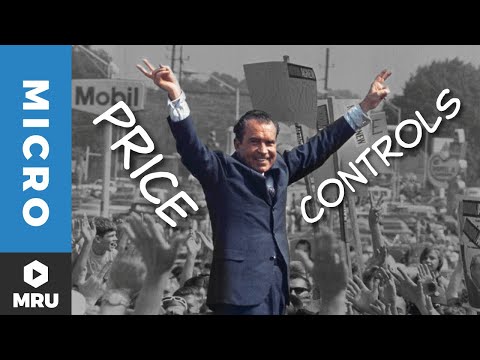
If price controls have negative consequences, why do governments enact them? Let’s revisit our example of President Nixon’s wage and price controls in the 1970s. These price controls were popular, as is demonstrated by Nixon being re-elected after they went into effect. The public didn’t think that the price controls were to blame for things such as long lines at the fuel pump. Without knowledge of the economics behind price controls, the public blamed foreign oil cartels and oil companies for the shortages. In this video we’ll also address questions such as: do price controls — like rent controlled apartments and the minimum wage — help the poor? Are there better ways to help the poor? If so, what are they? Let’s find out. Try our interactive practices! Test yourself on price ceilings: https://mru.io/kf4 Test yourself on price floors: https://mru.io/kbj Microeconomics Course: https://mru.io/6e7 Next video: https://mru.io/ceb Help us caption & translate this video! http://amara.org/v/GLJc/ 00:00 1971: Nixon enacts price controls 02:25 Arguments for price controls 03:16 Do price controls help the poor? 05:35 Minimum wage vs. wage subsidy

Continue this lesson in the app
Install CourseHive on Android or iOS to keep learning while you move.