Summary
Keywords
Full Transcript
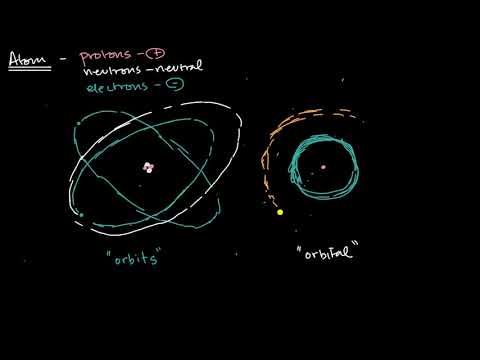
Keep going! Check out the next lesson and practice what you’re learning: https://www.khanacademy.org/science/ap-chemistry-beta/x2eef969c74e0d802:atomic-structure-and-properties/x2eef969c74e0d802:atomic-structure-and-electron-configuration/v/orbitals Want to explore more? Check out the full Atomic models and periodicity playlist here: https://www.youtube.com/playlist?list=PLSQl0a2vh4HD2AZcy7Pe8mHAiO5UG2WKt The electrons in an atom are arranged in shells that surround the nucleus, with each successive shell being farther from the nucleus. Electron shells consist of one or more subshells, and subshells consist of one or more atomic orbitals. Electrons in the same subshell have the same energy, while electrons in different shells or subshells have different energies. View more lessons or practice this subject at https://www.khanacademy.org/science/ap-chemistry-beta/x2eef969c74e0d802:atomic-structure-and-properties/x2eef969c74e0d802:atomic-structure-and-electron-configuration/v/orbitals Sections: 00:00 - Structure of the atom and subatomic particles 00:41 - Early atomic models and Bohr model 02:00 - Introduction to orbitals 03:03 - Probability model of electron location 04:00 - Energy levels and quantum jumps 05:03 - Standing waves and orbital shapes 06:05 - Visualizing s and p orbitals 07:10 - Orbital filling and electron repulsion 08:07 - Shells, subshells, and orbitals explained 09:29 - What's next: Electron configurations ------------------ Khan Academy is a nonprofit organization with the mission of providing a free, world-class education for anyone, anywhere. We offer quizzes, questions, instructional videos, and articles on a range of academic subjects, including math, biology, chemistry, physics, history, economics, finance, grammar, preschool learning, and more. We provide teachers with tools and data so they can help their students develop the skills, habits, and mindsets for success in school and beyond. Khan Academy has been translated into dozens of languages, and 15 million people around the globe learn on Khan Academy every month. As a 501(c)(3) nonprofit organization, we would love your help! Donate or volunteer today! Donate here: https://www.khanacademy.org/donate?utm_source=youtube&utm_medium=desc Volunteer here: https://www.khanacademy.org/contribute?utm_source=youtube&utm_medium=desc

Continue this lesson in the app
Install CourseHive on Android or iOS to keep learning while you move.