Summary
Keywords
Full Transcript
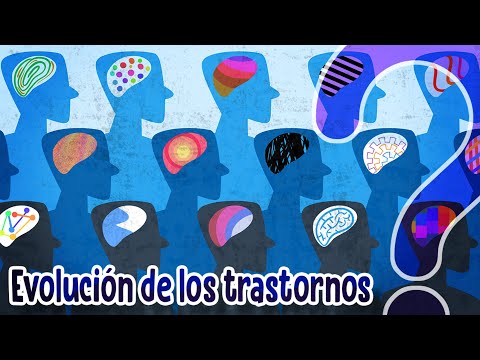
¿Por qué la evolución no ha eliminado los trastornos mentales? ¿Tienen alguna ventaja? Únete a este canal para acceder a sus beneficios: https://www.youtube.com/channel/UCX16cLWl6dCjlZMgUBxgGkA/join O apóyanos en Patreon (mismos beneficios): https://www.patreon.com/curiosamente PARA SABER MÁS: Blekhman R., Man O., Herrmann L., Boyko A.R., Indap A., Kosiol C, Bustamante C., Teshima K., Przeworski M. (2008) Natural Selection on Genes that Underlie Human Disease Susceptibility. Current Biology, 18:12. https://doi.org/10.1016/j.cub.2008.04.074. Bufalino C, Hepgul N, Aguglia E, Pariante CM. (2013) The role of immune genes in the association between depression and inflammation: a review of recent clinical studies. Brain Behav Immun. Jul;31:31-47. https://doi.org/10.1016/j.bbi.2012.04.009 Del Giudice M., Romina A., Adelina B., Marco E. (2010) The Evolution of Autistic-Like and Schizotypal Traits: A Sexual Selection Hypothesis. Frontiers in Psychology. https://doi.org/10.3389/fpsyg.2010.00041 Durisko, Z., Mulsant, B. H., McKenzie, K., & Andrews, P. W. (2016). Using Evolutionary Theory to Guide Mental Health Research. Canadian journal of psychiatry. Revue canadienne de psychiatrie, 61(3), 159–165. https://doi.org/10.1177/0706743716632517 Kyaga S., Landén M., Boman M., Hultman C., Långström N., Lichtenstein P., (2013) Mental illness, suicide and creativity: 40-Year prospective total population study. Journal of Psychiatric Research. 47(1) https://doi.org/10.1016/j.jpsychires.2012.09.010. Perlman RL. (2005) Why disease persists: an evolutionary nosology. Med Health Care Philos. 8(3):343-50. doi: 10.1007/s11019-005-2655-z https://link.springer.com/chapter/10.1007/1-4020-5216-2_8?noAccess=true Reardon, S. (2017) Geneticists are starting to unravel evolution's role in mental illness. Nature 551, 15–16 https://doi.org/10.1038/nature.2017.22914 Sullivan, R. J., Hagen, E. H., & Hammerstein, P. (2008). Revealing the paradox of drug reward in human evolution. Proceedings. Biological sciences, 275(1640), 1231–1241. https://doi.org/10.1098/rspb.2007.1673 Svensson A., Lichtenstein P., Sandin S., (2007) Hultman C.Fertility of first-degree relatives of patients with schizophrenia: A three generation perspective. Schizophrenia Research. 91 (1–3) https://doi.org/10.1016/j.schres.2006.12.002. Woolfson A. (2019). The biological basis of mental illness. Nature. https://doi.org/10.1038/d41586-019-00521-2 Guión: Mariana González Ilustraciones: Sergio Rivera https://www.instagram.com/sergioriverart Voz: Javier Lacroix https://twitter.com/javierlacroix Música: Miguel Solís, Mary Camarena y Jorge Verdín Animación: Alejandra Espinosa https://www.instagram.com/alepan_ca/ Sofía Espinosa https://www.instagram.com/miss_sofyjones/ Edición: Erick Blackmer https://www.imdb.com/name/nm8710137/ #Divulgación #Ciencia #Evolución

Continue this lesson in the app
Install CourseHive on Android or iOS to keep learning while you move.