
Summary
Keywords
Full Transcript
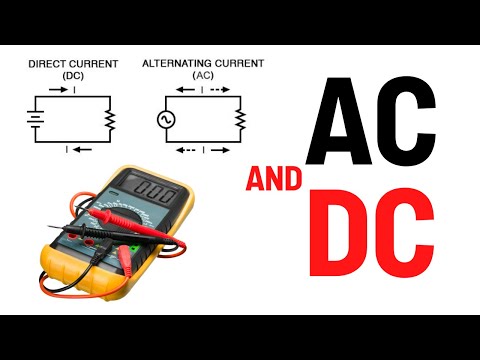
What is the difference between AC and DC? AC Current: "AC/DC" (referring to the rock band): AC/DC is a rock band known for their high-energy music. The acronym AC/DC also refers to the two types of electrical current - Alternating Current (AC) and Direct Current (DC). AC current is a type of electrical current that periodically changes direction, similar to how AC/DC music can switch between high-energy and slower ballads. AC current is the type of current that is commonly used in homes and buildings to power appliances and lights. It is also used to transport electricity over long distances because it can be easily transformed to different voltages. "Electricity dancing" or "Electricity flowing back and forth": AC current is called "alternating current" because the direction of the current alternates back and forth over time. The voltage and current in an AC circuit change direction many times per second, creating a waveform that looks like a sine wave. This waveform is often described as "electricity dancing" or "electricity flowing back and forth." "Alternating current" or "Alternator": Alternating current (AC) is a type of electrical current that changes direction periodically. AC is generated by an alternator, which is a device that converts mechanical energy (such as from a spinning turbine) into electrical energy. Alternators are commonly used in power plants to generate electricity. "Tesla" or "Nikola Tesla": Nikola Tesla was a Serbian-American inventor and electrical engineer who is best known for his contributions to the development of AC current. Tesla invented the AC induction motor and the transformer, which are key components in AC power systems. Tesla's work on AC current was instrumental in the development of the modern electrical power grid. DC Current: "Straight outta battery" (referring to the song "Straight Outta Compton"): DC current is also known as "direct current," which means that the current flows in one direction only. This is different from AC current, which periodically changes direction. DC current is typically produced by a battery or a DC power supply. "Straight outta battery" is a play on the title of the famous song "Straight Outta Compton" by N.W.A. "One-way street" or "Electricity flowing in one direction": DC current flows in one direction only, like a "one-way street." This is because the voltage and current in a DC circuit do not change direction over time. DC current is used in electronics and many other applications that require a steady source of power. "Direct current" or "Battery power": Direct current (DC) is a type of electrical current that flows in one direction only. DC is often generated by a battery, which converts chemical energy into electrical energy. DC power is commonly used in electronics, such as computers, televisions, and smartphones. "Edison" or "Thomas Edison": Thomas Edison was an American inventor and businessman who is best known for his work on the development of the incandescent light bulb. Edison also worked on the development of DC power systems, which were used in the early days of electrical power generation. Edison's work on DC power systems was later overshadowed by the development of AC power systems by Nikola Tesla and others.

Continue this lesson in the app
Install CourseHive on Android or iOS to keep learning while you move.




