Summary
Keywords
Full Transcript
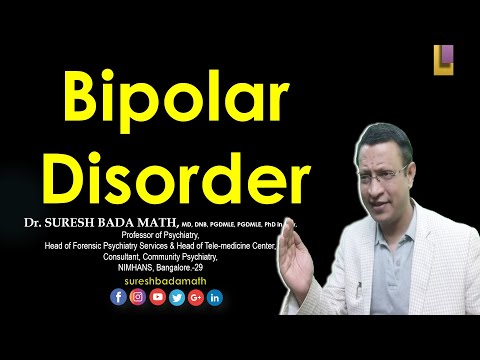
Bipolar Disorder (Bipolar affective Disorder) Mood Disorder or Manic Depressive Psychosis Bipolar disorder (formerly called manic-depressive illness or manic depression) is a mental disorder that causes unusual shifts in mood, energy, activity levels, concentration, and the ability to carry out day-to-day tasks. There are three types of bipolar disorder. All three types involve clear changes in mood, energy, and activity levels. These moods range from periods of extremely “up,” elated, irritable, or energized behavior (known as manic episodes) to very “down,” sad, indifferent, or hopeless periods (known as depressive episodes). Less severe manic periods are known as hypomanic episodes. Manic Episode A manic episode is a period of at least one week when a person is extremely high-spirited or irritable most of the day for most days, possesses more energy than usual, and experiences at least three of the following changes in behavior: -Decreased need for sleep (e.g., feeling energetic despite significantly less -sleep than usual -Increased or faster speech -Uncontrollable racing thoughts or quickly changing ideas or topics when speaking -Distractibility -Increased activity (e.g., restlessness, working on several projects at once) -Increased risky behavior (e.g., reckless driving, spending sprees) Symptoms of a manic episode commonly require a person to receive hospital care to stay safe. Depressive episode A major depressive episode is a period of at least two weeks in which a person has at least five of the following symptoms (including at least one of the first two symptoms): -Intense sadness or despair -Loss of interest in activities the person once enjoyed -Feelings of worthlessness or guilt -Fatigue -Increased or decreased sleep -Increased or decreased appetite -Restlessness (e.g., pacing) or slowed speech or movement -Difficulty concentrating -Frequent thoughts of death or suicide Bipolar I Disorder— defined by manic episodes that last at least 7 days, or by manic symptoms that are so severe that the person needs immediate hospital care. Usually, depressive episodes occur as well, typically lasting at least 2 weeks. Episodes of depression with mixed features (having depressive symptoms and manic symptoms at the same time) are also possible. Bipolar II Disorder— defined by a pattern of depressive episodes and hypomanic episodes, but not the full-blown manic episodes that are typical of Bipolar I Disorder. Cyclothymic Disorder (also called Cyclothymia)— defined by periods of hypomanic symptoms as well as periods of depressive symptoms lasting for at least 2 years (1 year in children and adolescents). However, the symptoms do not meet the diagnostic requirements for a hypomanic episode and a depressive episode. People with bipolar I disorder frequently have other mental disorders such as anxiety disorders, substance use disorders, and/or attention-deficit/hyperactivity disorder (ADHD). The risk of suicide is significantly higher among people with bipolar I disorder than among the general population. Treatment Bipolar disorder symptoms commonly improve with treatment. Medication is the cornerstone of bipolar disorder treatment, though talk therapy (psychotherapy) can help many patients learn about their illness and adhere to medications, preventing future mood episodes. Medications known as “mood stabilizers” (e.g., lithium) are the most commonly prescribed type of medications for bipolar disorder. These medications are believed to correct imbalanced brain signaling. Because bipolar disorder is a chronic illness in which mood episodes typically recur, ongoing preventive treatment is recommended. Bipolar disorder treatment is individualized; people with bipolar disorder may need to try different medications before finding what works best for them. In some cases, when medication and psychotherapy have not helped, an effective treatment known as electroconvulsive therapy (ECT) may be used. ECT involves several rounds of a brief electrical current applied to the scalp while the patient is under anesthesia, leading to a short, controlled seizure. ECT-induced seizures are believed to remodel brain signaling pathways. Since bipolar disorder can cause serious disruptions in a person’s daily life and create a stressful family situation, family members may also benefit from professional resources, particularly mental health advocacy and support groups. From these sources, families can learn strategies for coping, participating actively in the treatment, and obtaining support. If you like and want to learn more subscribe to channel - https://www.youtube.com/c/sureshbadamath follow me on LinkedIn - https://www.linkedin.com/in/sureshbadamath follow me on Facebook - https://www.facebook.com/sureshbadamath

Continue this lesson in the app
Install CourseHive on Android or iOS to keep learning while you move.