
Summary
Keywords
Full Transcript
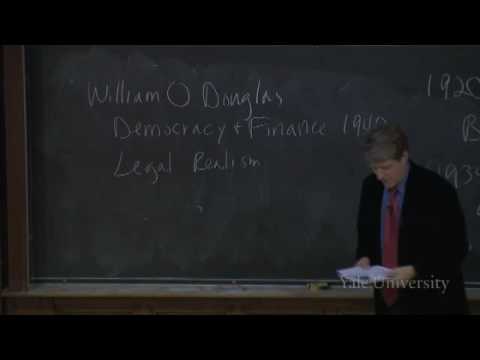
Financial Markets (ECON 252) Regulation of financial and securities markets is intended to protect investors while still enabling them to make personal investment decisions. Psychological phenomena, such as magical thinking, overconfidence, and representativeness heuristic can cause deviations from rational behavior and distort financial decision-making. However, regulation and regulatory bodies, such as the SEC, FDIC, and SIPC, most of which were created just after the Great Depression, are intended to help prevent the manipulation of investors' psychological foibles and maintain trust in the markets so that a broad spectrum of investors will continue to participate. 00:00 - Chapter 1. Introduction 03:24 - Chapter 2. Human Errors in Financial Decision-Making 22:34 - Chapter 3. Why Regulation of Finance Is Necessary 27:51 - Chapter 4. The Rise of the Securities and Exchange Commission 39:18 - Chapter 5. Regulation of Private Investments and Hedge Funds 49:14 - Chapter 6. Nongovernmental Surveillance of Insider Trading and Accounting Regulation 59:45 - Chapter 7. Protections for the Individual Investor: the SIPC and the FDIC 01:10:38 - Chapter 8. Conclusion Complete course materials are available at the Open Yale Courses website: http://open.yale.edu/courses This course was recorded in Spring 2008.

Continue this lesson in the app
Install CourseHive on Android or iOS to keep learning while you move.

