Summary
Full Transcript
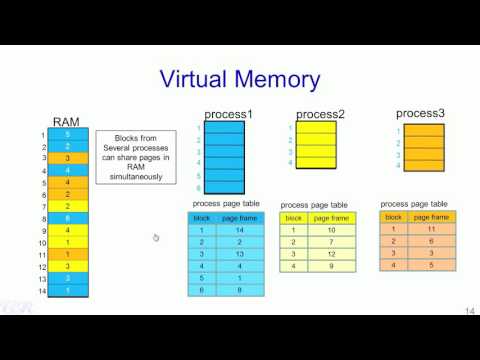
Welcome to 'Introduction to Operating Systems' course ! This lecture introduces the concept of virtual memory, a powerful memory management technique used in modern operating systems. It explains how virtual memory allows processes to have larger address spaces than the available physical memory, creating the illusion of abundant memory. The lecture begins by describing the basic mechanism of virtual memory, explaining how the RAM is divided into page frames and the process's address space is divided into blocks. It then introduces the concept of the page table, a data structure that maps virtual addresses to physical addresses, enabling flexible memory allocation. The lecture discusses the overhead of page table lookups and explains how the Translation Lookaside Buffer (TLB) is used to speed up address translation. It further explores the concept of demand paging, where only the required portions of a process are loaded into memory on demand, reducing memory usage and improving system performance. Finally, the lecture discusses swapping, the process of moving data between RAM and secondary storage (swap space) to manage memory allocation effectively. NPTEL Courses permit certifications that can be used for Course Credits in Indian Universities as per the UGC and AICTE notifications. To understand various certification options for this course, please visit https://nptel.ac.in/courses/106106144 #VirtualMemory #PageTable #DemandPaging #Swapping #TLB

Continue this lesson in the app
Install CourseHive on Android or iOS to keep learning while you move.