
Summary
Keywords
Full Transcript
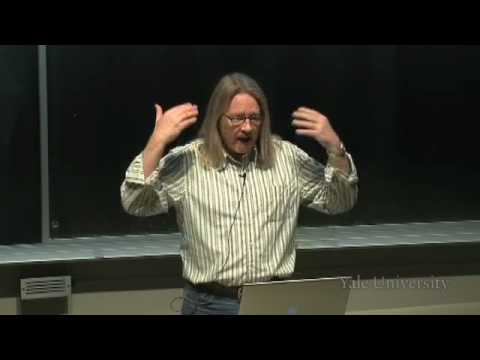
Frontiers of Biomedical Engineering (BENG 100) Professor Saltzman talks about cell communication, specifically ligand-receptor interactions that are important in maintaining homeostasis in the body. Different types of receptors and ligands, the nature of their interactions and ways to apply this into developing drugs are discussed (eg. Aldopa, Taximofen, beta-blockers). Next, Professor Saltzman talks about kinases, phosphatases, cyclic AMP and the mechanism of switching protein states. Three categories of cell communication signals are introduced: autocrine, paracrine, and endocrine. Finally, an example of cell communication using regulation/response to blood sugar level is presented. 00:00 - Chapter 1. Overview of Cell Communication 07:39 - Chapter 2. Mechanisms of Cell Communication 16:27 - Chapter 3. Agonists and Antagonists 21:31 - Chapter 4. Receptors 28:02 - Chapter 5. Protein Signal Transduction 34:54 - Chapter 6. Autocrines, Paracrines, Endocrines Complete course materials are available at the Open Yale Courses website: http://open.yale.edu/courses This course was recorded in Spring 2008.

Continue this lesson in the app
Install CourseHive on Android or iOS to keep learning while you move.

