
Summary
Keywords
Full Transcript
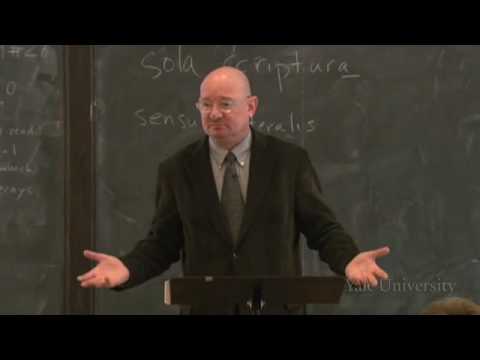
Introduction to New Testament (RLST 152) The principles of interpreting the New Testament in this course assume a historical critical perspective. The historical critical method of interpreting a text privileges the intended meaning of the ancient author, the interpretation of a text's original audience, the original language the text was written in, and the avoidance of anachronism. However, for most of the last two thousand years, this has not been the method of interpretation of the Bible. Pre-modern interpreters, such as Origen and Augustine, felt free to allegorize and use the text as they saw fit. It was only through the Reformation and other events in modern history that the historical critical method became the predominant method of interpretation. 00:00 - Chapter 1. The Principles of the Historical Critical Method of Interpretation 20:11 - Chapter 2. The History of Historical Criticism 30:53 - Chapter 3. Pre-Modern Interpretation and "Literal" and "Allegorical" Meanings of Texts 34:19 - Chapter 4. Pre-Modern Interpreters: Origen 39:06 - Chapter 5. Pre-Modern Interpreters: Augustine 43:32 - Chapter 6. Pre-Modern Interpreters: Bernard of Clairvaux Complete course materials are available at the Open Yale Courses website: http://open.yale.edu/courses This course was recorded in Spring 2009.

Continue this lesson in the app
Install CourseHive on Android or iOS to keep learning while you move.


