
Course Hive
Search

Welcome

Sign in or create your account

Continue with Google
or
1. Why Finance?
Play lesson

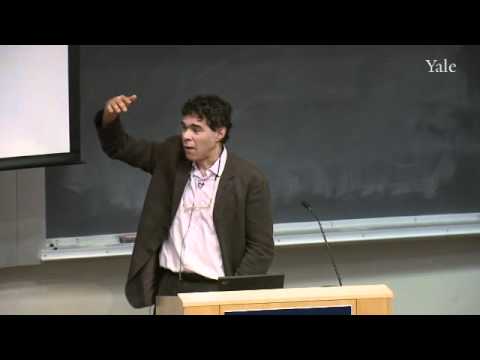
Financial Theory with John Geanakoplos - 1. Why Finance?

5.0 (1)
9 learners

What you'll learn

This course includes

  • 31.5 hours of video
  • Certificate of completion
  • Access on mobile and TV

Financial Theory with John Geanakoplos 1. Why Finance?

1. Why Finance? Transcript and Lesson Notes

Financial Theory (ECON 251) This lecture gives a brief history of the young field of financial theory, which began in business schools quite separate from economics, and of my growing interest in the field and in Wall St

Quick Summary

Financial Theory (ECON 251) This lecture gives a brief history of the young field of financial theory, which began in business schools quite separate from economics, and of my growing interest in the field and in Wall St

Key Takeaways

  • Review the core idea: Financial Theory (ECON 251) This lecture gives a brief history of the young field of financial theory, which began in business schools quite separate from economics, and of my growing interest in the field and in Wall St
  • Understand how Arbitrage fits into 1. Why Finance?.
  • Understand how efficiency fits into 1. Why Finance?.
  • Understand how collateral fits into 1. Why Finance?.
  • Understand how mortgage fits into 1. Why Finance?.

Key Concepts

Full Transcript

Financial Theory (ECON 251) This lecture gives a brief history of the young field of financial theory, which began in business schools quite separate from economics, and of my growing interest in the field and in Wall Street. A cornerstone of standard financial theory is the efficient markets hypothesis, but that has been discredited by the financial crisis of 2007-09. This lecture describes the kinds of questions standard financial theory nevertheless answers well. It also introduces the leverage cycle as a critique of standard financial theory and as an explanation of the crisis. The lecture ends with a class experiment illustrating a situation in which the efficient markets hypothesis works surprisingly well. 00:00 - Chapter 1. Course Introduction 10:16 - Chapter 2. Collateral in the Standard Theory 17:54 - Chapter 3. Leverage in Housing Prices 33:47 - Chapter 4. Examples of Finance 46:13 - Chapter 5. Why Study Finance? 50:13 - Chapter 6. Logistics 58:22 - Chapter 7. A Experiment of the Financial Market Complete course materials are available at the Yale Online website: online.yale.edu This course was recorded in Fall 2009.

Lesson FAQs

What is 1. Why Finance? about?

Financial Theory (ECON 251) This lecture gives a brief history of the young field of financial theory, which began in business schools quite separate from economics, and of my growing interest in the field and in Wall St

What key concepts are covered in this lesson?

The lesson covers Arbitrage, efficiency, collateral, mortgage, psychology.

What should I learn before 1. Why Finance??

Review the previous lessons in Financial Theory with John Geanakoplos, then use the transcript and key concepts on this page to fill any gaps.

How can I practice after this lesson?

Practice by applying the main concepts: Arbitrage, efficiency, collateral, mortgage.

Does this lesson include a transcript?

Yes. The full transcript is visible on this page in indexable HTML sections.

Is this lesson free?

Yes. CourseHive lessons and courses are available to learn online for free.

Continue Learning

Course Hive

Continue this lesson in the app

Install CourseHive on Android or iOS to keep learning while you move.

Related Lessons

Related Courses

FAQs

Course Hive
Download CourseHive and keep learning anywhere
Get App
